
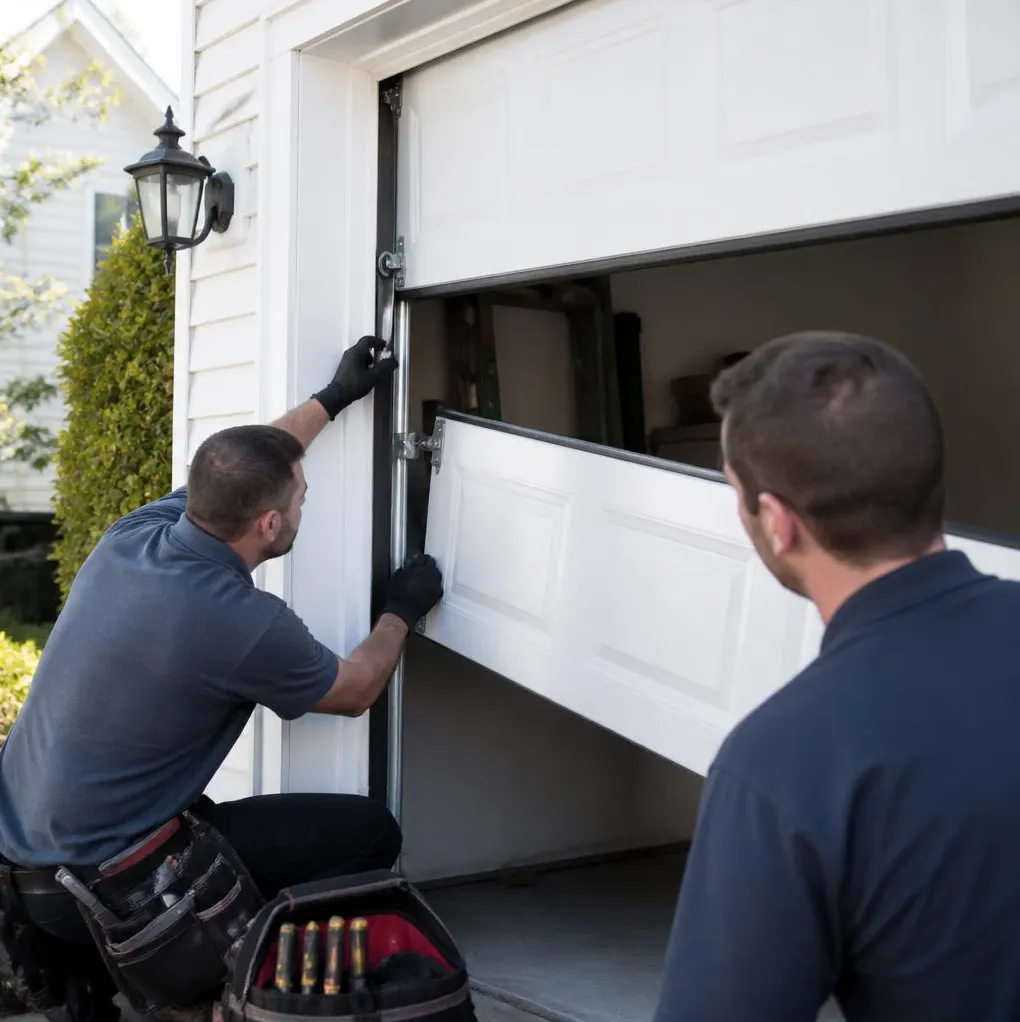
The Moment You Notice Something's Off
It usually starts small. You hit the wall button and the door hesitates before it lifts, or it rises a little slower than it did last summer. Maybe you hear a faint grinding or a dull thud right as it starts moving. You tell yourself you'll look at it later, because the door still opens. That hesitation is almost always the spring system talking to you before it fails completely — and in a Mesa garage, where triple-digit heat bakes the lubricant off the coils all summer and cool desert nights make the metal contract again overnight, that wear happens faster than most homeowners expect.
Before a spring snaps and leaves your car trapped inside (or worse, lets the door crash down), walk through this checklist in your own garage. It takes about ten minutes.
Walk the Checklist
1. Look for a Gap in the Torsion Spring Coils
If you have one or two torsion springs mounted on a bar directly above the closed door, look closely at the coils. A healthy spring has tightly wound coils with no visible separation. A gap of an inch or more in the coil — even if the door still seems to work — means that spring has already broken and the other one is doing all the work. If you see this, stop using the door by opener until it's replaced. The remaining spring and the opener motor are both under extra strain and can fail suddenly.
2. Watch the Door Lift Evenly
Stand back and watch a full open-close cycle. A door with balanced springs rises smoothly and stays level across its whole width. If one side lifts a beat before the other, or the door visibly tilts as it travels, one torsion spring has lost tension relative to the other. Left alone, this uneven pull stresses the tracks and rollers too, turning a spring problem into a track problem.
3. Listen to the Opener
Garage door openers are built to guide the door, not lift its full weight. If yours sounds like it's straining — a labored hum, a grinding noise, or it stutters partway up — the springs have stopped carrying their share of the load. Continuing to run the opener this way shortens its motor life fast, especially in summer when heat already pushes opener motors toward their limit.
4. Do the Manual Lift Test
With the opener disconnected (pull the red release cord), lift the door by hand about halfway and let go. A door with good springs will stay roughly in place or drift slightly. A door that's heavy, hard to lift, or drops on its own the moment you let go has springs that are losing their ability to counterbalance the door's weight. This test alone tells you more than almost anything else on this list.
5. Check for Rust, Flaking, or Pitting
Run your eyes (not your bare hand) along the length of each spring. Surface rust, flaking metal, or small pits in the coil are signs the spring's integrity is compromised. Monsoon season brings sudden humidity and blowing dust into garages that are otherwise bone-dry all year, and that moisture-dust combination speeds up corrosion on metal that's already stressed by heat cycling.
6. Inspect Extension Springs for Stretch and Missing Safety Cables
If your door uses extension springs — the kind that run along the horizontal tracks above the door, rather than a bar above the opening — check that each spring still has a visible gap between coils when the door is closed; a spring stretched so far the coils touch has lost its tension. Also confirm a safety cable runs through the center of each spring. If a cable is missing, frayed, or was never installed, that spring can whip dangerously if it breaks. This is a safety issue, not just a performance one.
7. Note Any Sudden Slamming or Dropping
A door that used to lower slowly and now drops the last foot with a bang has springs that can no longer control its descent. This is one of the clearest pre-failure signs and tends to show up right before a full break.
8. Count the Years (or Cycles) in Service
Most residential springs are rated for a set number of open-close cycles, often translating to several years of normal household use. Desert heat doesn't just age the rubber seals and lubricant on your door — it also accelerates metal fatigue in springs through constant expansion in the heat of the day and contraction in cool desert nights. If you can't remember the last time the springs were replaced and the door sees daily use, treat age as a warning sign on its own, even without obvious symptoms yet.
Why This Matters More in Mesa's Climate
Garage doors here work harder than the national average suggests. Summer heat cooks lubricant off moving parts and softens the temper of metal springs over repeated hot-cold cycles, while UV exposure and blowing monsoon dust add wear that garages in milder climates simply don't deal with. A spring that might last comfortably for years elsewhere can show fatigue sooner under these conditions, which is exactly why a quick seasonal check matters.
When to Call Mesa Garage Door Repair
If you spot a coil gap, an uneven lift, a heavy manual pull, or rust and pitting during your walkthrough, it's time to call us before the spring finishes failing on its own schedule. Our Garage Door Spring Replacement service replaces both springs as a matched pair (even if only one has failed) so the door stays balanced, and we size the new springs correctly for your door's weight and cycle count. If your springs are still holding but everything else — rollers, hinges, lubrication — is due for attention after a hot summer, our Garage Door Maintenance & Tune-Up service catches small issues like these before they turn into a broken spring or a stuck door.
If you're running through this checklist right now and something doesn't look right, give Mesa Garage Door Repair a call. We serve Mesa, Gilbert, Chandler, Tempe, Scottsdale, Apache Junction, Queen Creek, and Gold Canyon, and we can usually get a technician out the same day to take a look before that worn spring turns into a stuck door or a stranded car.